

understanding
What is
diabetes?
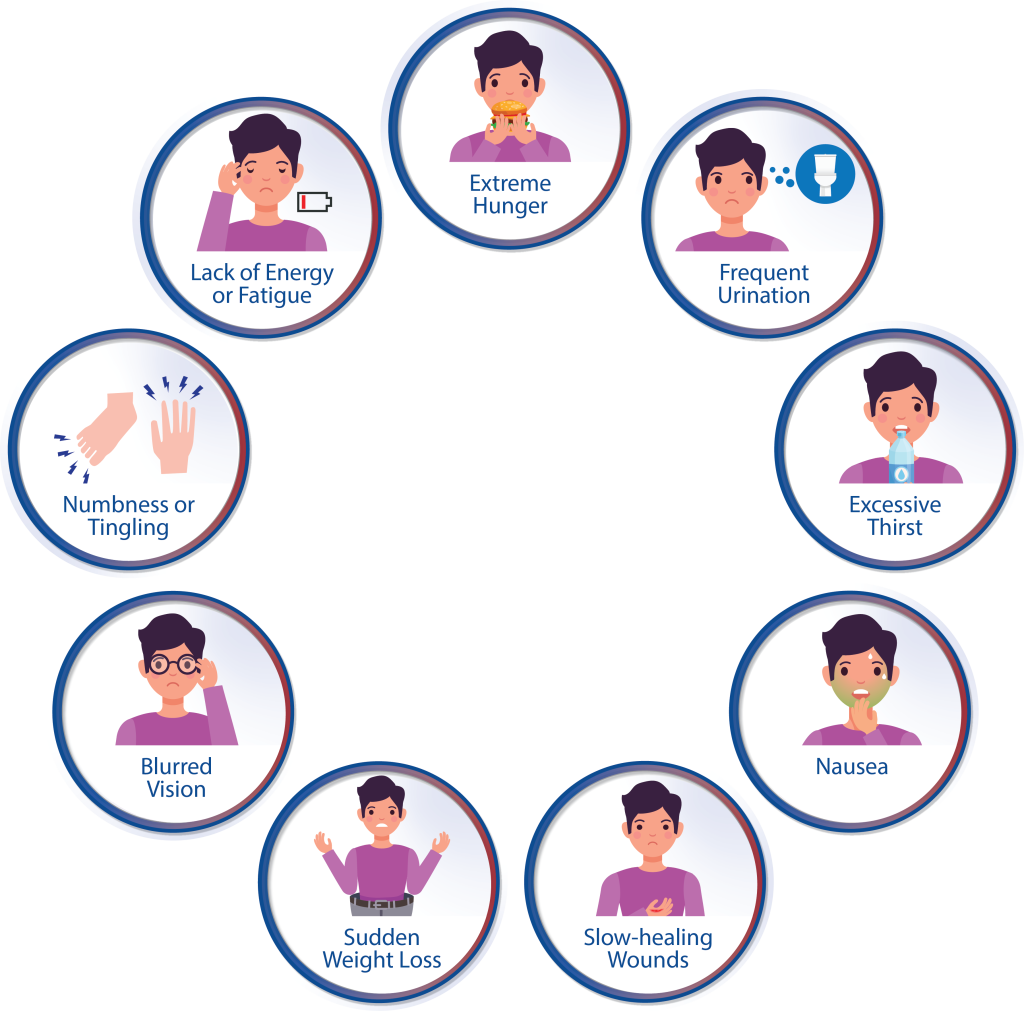
Diabetes is a serious, long-term (or chronic) condition that occurs when glucose levels in a person’s blood rise because the body cannot produce any or enough insulin or cannot effectively use the insulin it produces.
What causes diabetes?
and who is at risk?
The following factors can increase your risk to get DIABETES.
- Family history of diabetes
- Physical Inactivity
- Age (risk increases after 45 years old)
- Low HDL Cholesterol or higher triglycerides
- Ethnic Background (higher risk in South Asians, Africans & Hispanics)
- Being over weight or obese
- Unhealthy diet (high in sugars, fats and processed foods)
- High Blood Pressure
- History of Gestational Diabetes

main types of
diabetes?
TYPE 1 DIABETES
This type is an autoimmune disease in which your immune system attacks and destroys insulin-producing cells in your pancreas for unknown reasons. Up to 10% of people with diabetes have Type 1. It’s usually diagnosed in children and young adults, but it can develop at any age.
TYPE 2 DIABETES
In this form of diabetes, the body either does not produce enough insulin or the body’s cells do not respond properly to insulin – a condition known as insulin resistance. It is the most common type of diabetes, primarily affecting adults, although it can also occur in children.
LADA
Latent Autoimmune Diabetes in Adults (LADA) is a slow-progressing form of autoimmune diabetes that starts in adulthood-typically after age 30. It begins like Type 2 diabetes [still producing insulin) but is caused by an autoimmune attack on B-cells. Over time, insulin production declines and insulin treatment becomes necessary.
MODY
Maturity-onset diabetes of the young (MODY) is a hereditary diabetes caused by a mutation in a single gene, often appearing in youth and strongly running in families. MODY is not autoimmune-and many forms respond well to specific oral medications rather than insulin.
GESTATIONAL DIABETES
This type of diabetes develops in some females during pregnancy. Gestational diabetes usually goes away after pregnancy. However, if you have gestational diabetes, you’re at a higher risk of developing Type 2 diabetes later in life.